Leading the way: David Marsden takes the helm as HEA President

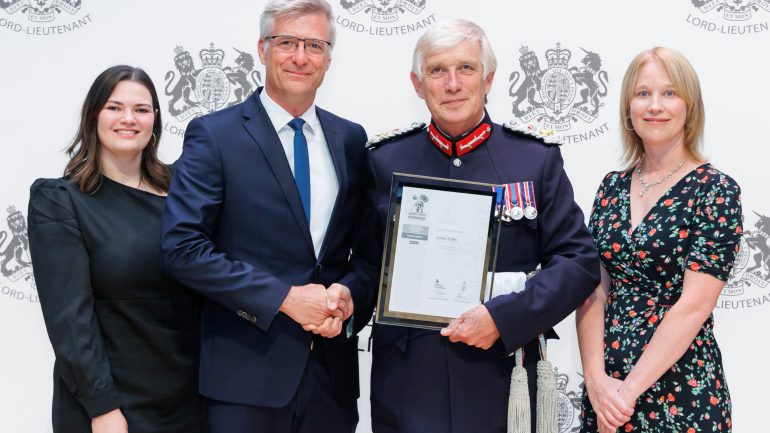
David Marsden, Yunex Traffic’s Services Director, was elected President of the Highway Electrical Association (HEA) at its AGM in November, a prestigious and important industry role that he will undertake for twelve months.
We spoke to David about the presidency and his views on the challenges and opportunities that lie ahead for businesses operating in the highway electrical sector.
Can you start by telling us a little about yourself and your background?
I’ve spent 35 years working in this fascinating sector, gaining experience across a broad range of product groups, including traffic signals, street lighting, motorway communications, traffic enforcement systems and electric vehicle charging infrastructure.
For the past 20 years I have worked for Yunex Traffic (previously Siemens ITS). We have over 400 HERS-registered engineers and maintain almost half of all the UK’s traffic signals – as well as a wide range of traffic control, traffic management, enforcement and electric vehicle charging equipment and systems. We’re also the only major UK manufacturer of a broad range of traffic control equipment, exporting to 6 continents.
I’m extremely proud to be the first person from the ITS sector to be elected President of the HEA and look forward to working closely with colleagues from across the industry to tackle some of the issues that we collectively face and to explore new opportunities.
Tell us more about the HEA and its main goals and challenges.
The HEA is a professional membership body, representing over 100 organisations whose contract services range from street lighting and traffic signals to highway communications. In addition, the HEA represents HEA HEMSA members who design, manufacture, assemble, supply and distribute equipment into the highway electrical sector. Its aims are to contribute to policy development by maintaining influential and constructive relationships with the Government and other bodies in the UK. It plays a key role in the identification and dissemination of good practice, and promotes the importance of the profession to stakeholders. We also provide member services including technical and health and safety advice, training and accreditation, as well as running the Highway Electrical Skills Academy (HESA) and administering the Highway Electrical Registration Scheme.
Like all good organisations, the HEA must constantly evolve, making sure it represents the changing needs of the businesses it represents. But particularly as an association, we have to use our strong collective voice to engage, influence and encourage, to share best practice and help drive change where it is needed.
What would you say are the main issues facing the ITS sector?
In common with many industries, our sector is having to deal with skill shortages. To help address this, the association is actively seeking to attract, develop and retain the next generation of talent, promoting the benefits, opportunities and careers that we can offer. In doing so, we will endeavor not only to recruit the best people, but also to build a diverse talent pool capable of driving the sector forward well into the future.
With an ever-increasing reliance on intelligent traffic systems to keep our towns and cities moving safely and our air quality to keep improving, it’s a great time to be involved in this fast-moving and highly innovative sector. And we need the next generation of talent to help drive the sector forward and to help us deal with some burning issues, including the need to upgrade our ageing infrastructure and deal with lamp obsolescence and the PSTN switch-off.
And what are the main opportunities?
I believe we will see the biggest growth in the electric vehicle charging infrastructure. There are already more than 70,000 public charge points in the UK, a third more than this time last year, and the UK Government has set a target of 300,000 by 2030. Whilst many of our businesses are involved in this expansion, it’s inevitably attracting new entrants, so we need to make sure standards are maintained through the promotion of HERS and NHSS8, and that every business is certified appropriately. This will also help grow the HEA through increased membership, participation and influence.
What will be your key priorities as President?
My first priority is, and will always be, safety. Standards today are unrecognisable (in a good way) from when I first joined this industry, but working with electricity, often at height, alongside live traffic, and lively pedestrians, is still a hazardous place to be. My first thoughts are always to design risk out of how we do things.
And although the sector is still dominated by street lighting (with over 7 million installations in the UK), there is a lot more electrical equipment on the highway now and we operate in a complex environment. The number of traffic signals is measured in hundreds of thousands, and enforcement and surveillance cameras in the tens of thousands, along with all types of electronic message signs, air quality sensors and the like. Embracing and promoting this growing diversity and the opportunities it brings is key.
The HEA Councils represent our member organisations, so building those relationships to understand their (changing) needs must also be a cornerstone of any presidency.
So what does the year ahead hold for the HEA?
The HEA is an active and progressive organisation, working with its members to make sure it best represents their interests, provides support services that add value to their organisations, and drives the sector forward with a single powerful voice. During my year as President, I hope to reflect these strong values, using them to spearhead a campaign that attracts the best talent and builds a dynamic, diverse and effective workforce across the industry.