


Milestones reached in Connected Mobility Technology
Did you know that our Connected Mobility technology supports a fully autonomous bus service in Oxford?
As part of a long-term connected mobility pilot in Oxfordshire, Phase 2 of the Mi-Link green travel programme has seen passengers travelling free of charge on a fully autonomous ‘self-driving’ electric bus service within the Milton Park science park in Didcot. Covering 500 journeys over a total of 3,000 miles, more than 1,000 passengers used the service during this phase, with the electric bus saving nearly 1.5 metric tonnes of CO2 compared to a diesel powered one. As a result of the trial’s success, the service now also operates between the science park and Didcot Parkway railway station.
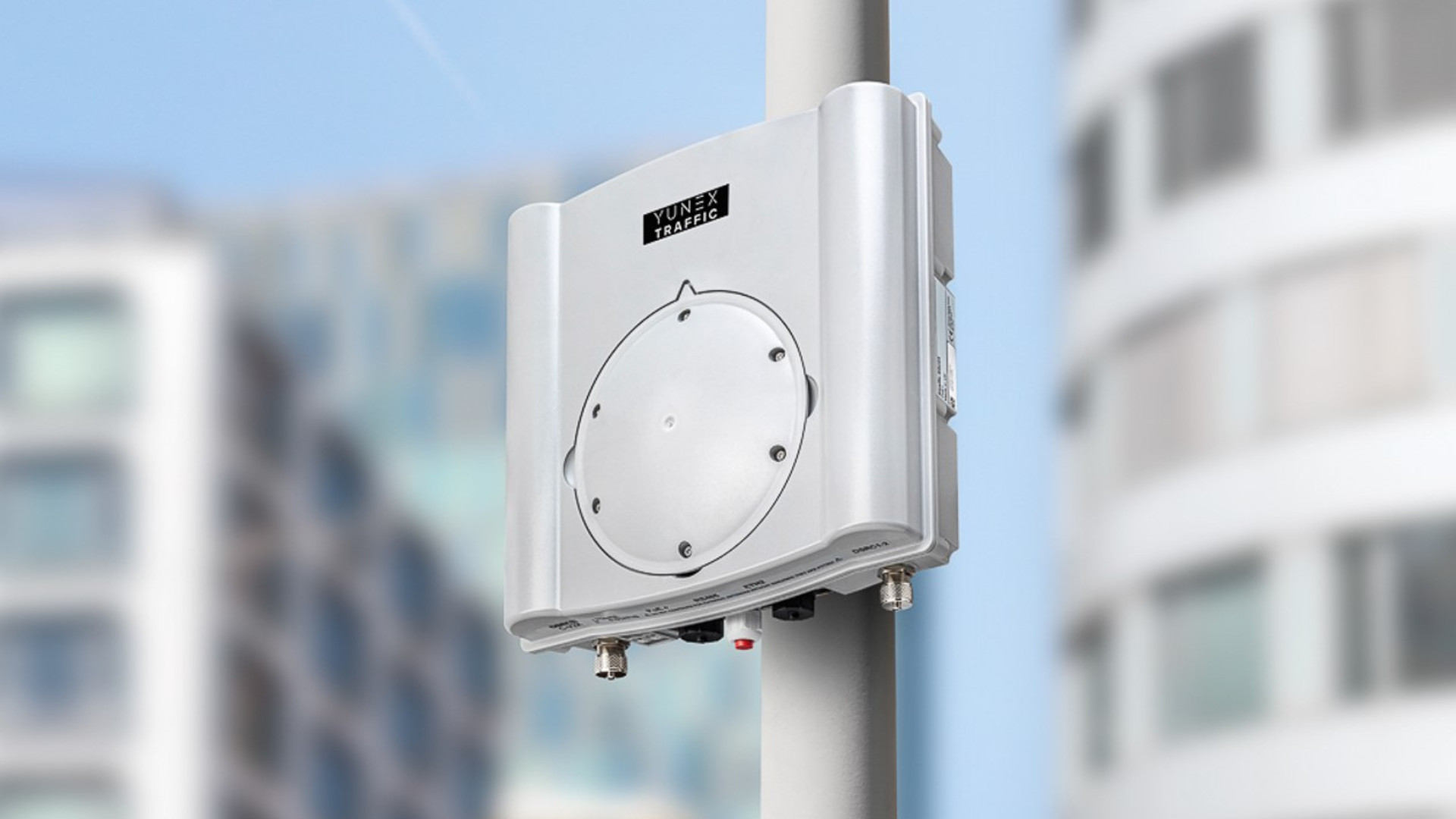
As a key partner in the trial, Yunex Traffic’s second generation roadside units, RSU2X, have been installed in two different locations along the route, with the units sending vital information to the buses’ onboard equipment over short range ITS-G5 communications, enabling the vehicles to operate efficiently and safely.
Flexible and secure, bidirectional communication via the roadside units enables both the transmission of information, such as speed limits, and the reception of onboard messages in real time. The key data provided by the RSU2X creates a more precise picture of the current traffic situation, enabling more efficient traffic control, safer operation and a significant reduction in vehicle emissions.
In Oxford, the units send SPaT and MAP messages to the autonomous buses. The SPaT (Signal Phase and Timing) data provides information on the traffic signal status and timing as the bus approaches signals, helping the onboard technology to determine what action to take. The MAP messages provide data on the topology of the intersection, providing geometric information and detail about the layout of the lanes on the road.
Did you also know that our advanced roadside units are supporting a new autonomous bus service across the Firth of Forth?
The CAVForth autonomous bus service across the Firth of Forth near Edinburgh operates a scheduled seven day a week passenger service, with buses departing Ferrytoll Park & Ride in Fife for Edinburgh Park interchange every 30 minutes. The 14-mile bus route uses the Forth Road Bridge and is made up of A-roads, motorways, bus lanes and private land. It also includes a range of complex traffic manoeuvres such as roundabouts, traffic lights, and ‘weaving’ motorway lane changes. The buses travel in mixed traffic up to 50mph.
In support of the project, Yunex Traffic installed its advanced roadside units (RSU2X) at three sites along the 14 mile route, including on the Forth road bridge. The RSU2X technology enables SPaT (Signal Phase and Timing) messages to be sent to the buses, which then use that message to support validation of their system to help them drive autonomously through traffic signals. Yunex Traffic was also awarded the contract to maintain the V2X (vehicle to everything) equipment, including the RSUs and controller, for 12 months.
CAVForth operates at the highest level of autonomous vehicle technology currently permissible on public roads, SAE Level 4, requiring the buses to retain a safety driver.
Flexible and secure, bidirectional communication via the roadside units enables both the transmission of information, such as speed limits, and the reception of onboard messages in real time. The key data provided by the RSU2X creates a more precise picture of the current traffic situation, enabling more efficient traffic control, a significant reduction in accident numbers and an even greater cut in emissions than had previously been possible.


